
Building Materials
Our focus is on the exclusive use of natural materials. By centering the design and construction process around renewable, non-toxic, and environmentally friendly resources, we promote sustainable living and long-term well-being for inhabitants.
Exterior Wall Structure and Ventilation
All exterior walls in the Easy Dome system are ventilated. A wooden framework is installed to support the climate membrane, which is then covered with exterior cladding. Preferred cladding options include vertical wooden boards or lightweight reinforced concrete panels.
Aluminum flashing is a critical component in ensuring weather resistance. It is custom-manufactured to match the chosen exterior cladding for a precise and durable fit.
Airtightness and Ventilation System
The Easy Dome construction system results in a highly airtight building envelope, with tested air leakage of just 0.01 L/m²/sec (maximum allowed: 1.5 L/m²/sec). To ensure healthy indoor air quality, Easy Domes recommends installing at least one mechanical ventilator at the top of the dome.
Ventilation is primarily natural, utilizing operable windows, doors, and adjustable wall valves. Kitchens and bathrooms are equipped with dedicated air valves for targeted ventilation. In large dome structures, a 160 m³/h roof-mounted ventilator is standard to support continuous air circulation.
Indoor Climate and Material Selection
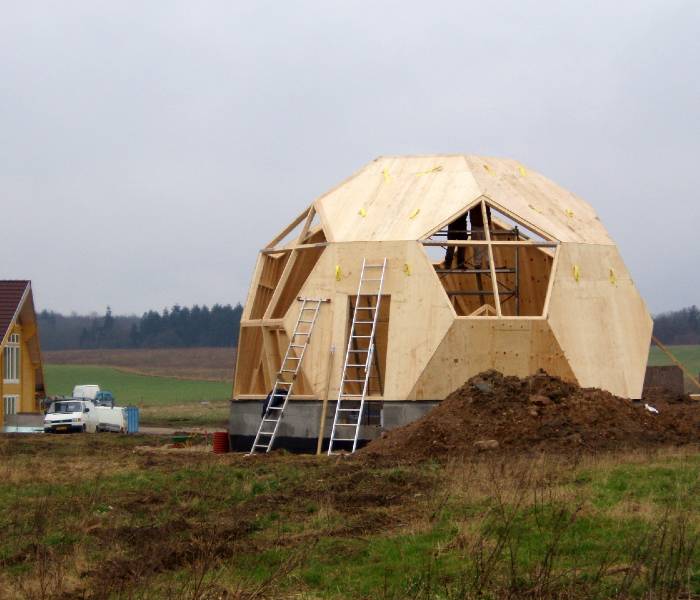
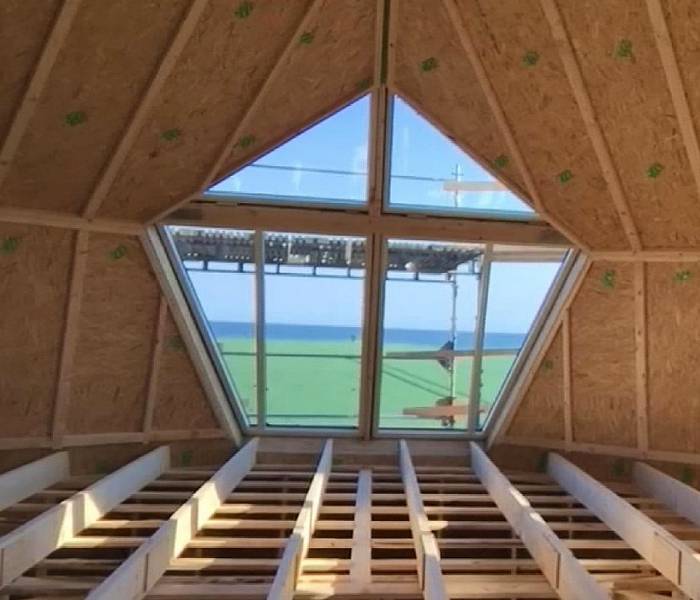
Indoor climate comfort is a priority in Easy Dome construction. To promote a healthy living environment, the use of certified, sustainable interior materials is recommended—specifically those free from harmful emissions such as formaldehyde. A practical and efficient solution for interior dome wall coverage is the use of OSB/2 (Oriented Strand Board) panels mounted on a pine framework.
Breathable Wall and Roof Construction
In large dome structures, thick layers of hygroscopic insulation—such as 350 mm of cellulose (paper wool) combined with an additional 50 mm of sheep’s wool—enable a breathable wall and roof assembly. This approach eliminates the need for a traditional plastic humidity barrier, allowing for moisture regulation and natural air purification. For such constructions, a dome-top ventilator is essential to maintain air quality and control humidity levels.
Moisture Protection
Humidity membranes are still applied in specific areas, such as bathroom and technical room floors and partition walls, to protect against localized moisture exposure.
Floor Construction Options
The flooring system can be constructed in various ways:
Option 1: Laminated floorboards mounted on a base plate above supporting beams.
Option 2: Solid wooden boards installed directly on floor beams.
Option 3: A raised wooden floor built over a 100 mm concrete slab laid on pressure-resistant insulation.
Option 4: Solid floor beams insulated and suspended above a ventilated crawl space or basement.
Underfloor heating systems are highly compatible with heat pump solutions and are the preferred method for efficient and comfortable space heating.
Technical Installations and Energy Supply
The installation of technical systems—such as heating, hot water, ventilation, electricity, IT infrastructure, and inlets/outlets—should be planned according to the intended interior layout and use of the dome.
Sustainable Energy Solutions
Sustainable energy sources such as solar collectors and heat pumps are highly recommended, both for on-grid and off-grid setups. These systems offer efficient, environmentally friendly energy supply options and contribute to long-term energy independence.
Heating and Hot Water Systems
Room heating and domestic hot water can be provided through a variety of integrated systems, depending on the type of grid connection. One effective solution includes combining floor convectors for space heating with a central tank storage system. The tank can be fitted with an electric immersion heater ranging from 3 kW to 6 kW to ensure reliable hot water supply and supplemental heating.
Foundation Options
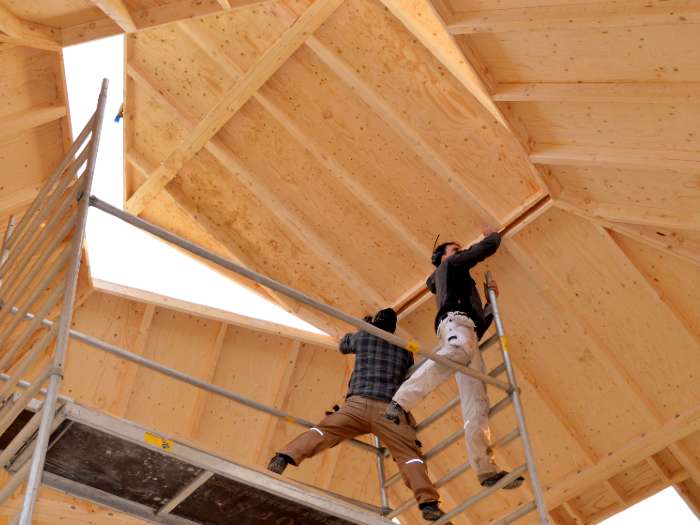
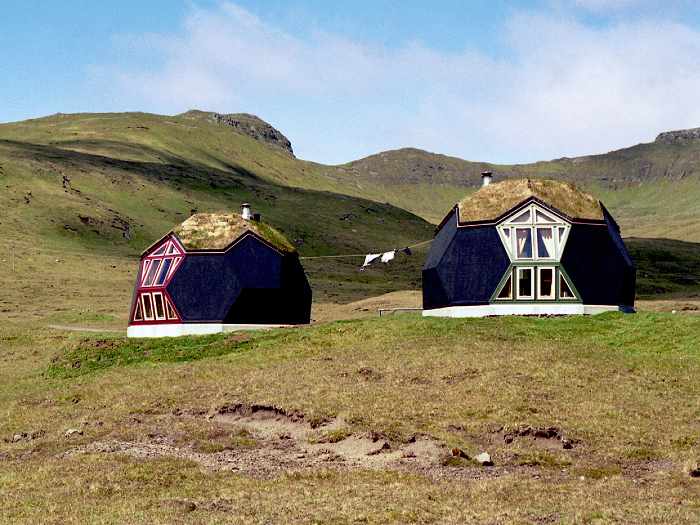
The Easy Dome can be constructed on virtually any site and adapted to all types of soil and ground conditions. The foundation system is chosen based on local requirements, environmental context, and construction needs.
1. Reinforced Concrete Plinth (Recommended Standard)
The most stable and durable foundation is a reinforced concrete plinth, raised 30–60 cm above ground level. This solution offers excellent load distribution, moisture protection, and long-term durability, making it ideal for most climate zones.
2. Wooden Post-and-Beam Construction
Alternatively, a solid wooden post-and-beam foundation can be used. This structure is anchored to the ground or basement using iron bolts and is particularly suitable for cold climates such as the Arctic. It can also be adapted for use over shallow water, offering a practical solution for lakeside or flood-prone locations.
3. Stone and Earth Base (Simplified Solution)
For simpler or more traditional builds, a basic foundation can be created by placing large stones at each corner of the dome. The gaps between can be filled with local materials such as bricks, clay, or compacted earth. While more basic, this method is cost-effective and low-impact, suitable for small-scale or off-grid projects.